
Key Takeaways
- Country is more than land: For Aboriginal and Torres Strait Islander peoples, connection to Country describes a living relationship with land, water, sky, and community that carries law, language, story, and identity, not a view of nature as a resource.
- Respect requires the right custodians: Representing connection to Country in design must be led by First Nations people. DuraCube’s First Nations Range was co-created with Blaklash, a 100% Aboriginal owned and operated design consultancy, under formal Indigenous Cultural and Intellectual Property agreements.
- Specification can carry story and impact: Choosing the First Nations Range lets specifiers embed cultural narrative into a project while directing 10% of every specification to the Clontarf Foundation, turning a material choice into measurable community benefit.
Connection to Country sits at the heart of Aboriginal and Torres Strait Islander cultures, yet it is often flattened into a single line on an Acknowledgement slide. For architects, designers, and specifiers working toward genuine Indigenous inclusion and social procurement outcomes, understanding what connection to Country actually means is the starting point for representing it with integrity. This guide explains the concept, why it matters in the built environment, and how DuraCube, working in close collaboration with Blaklash, has translated that understanding into the First Nations Range in a way that keeps cultural authority where it belongs.
Table of Contents
ToggleWhat Connection to Country Means
Connection to Country is the reciprocal relationship that Aboriginal and Torres Strait Islander peoples hold with their ancestral lands, waterways and seas. Country encompasses plants, animals, and community, bound together by kinship, law, language, ceremony, and story that stretch back tens of thousands of years.
Country is a living and recognised as family, being cared for and spoken for by the community. People belong to Country rather than owning it, and that belonging brings responsibility: to care for the land through practices such as cultural burning, seasonal harvesting, and ceremony, and to maintain the knowledge that keeps those cycles healthy. This is why the concept is frequently written with a capital “C”, to signal that Country is a proper, living entity rather than a generic place.
Connection to Country also shapes identity and wellbeing. Knowing one’s Country, its stories, its boundaries, and its obligations, anchors a person’s sense of self and their place within community. When that connection is disrupted, the effects ripple through health, culture, and belonging, which is part of why caring for and representing Country respectfully carries such weight.
Connection to Country in Aboriginal Culture
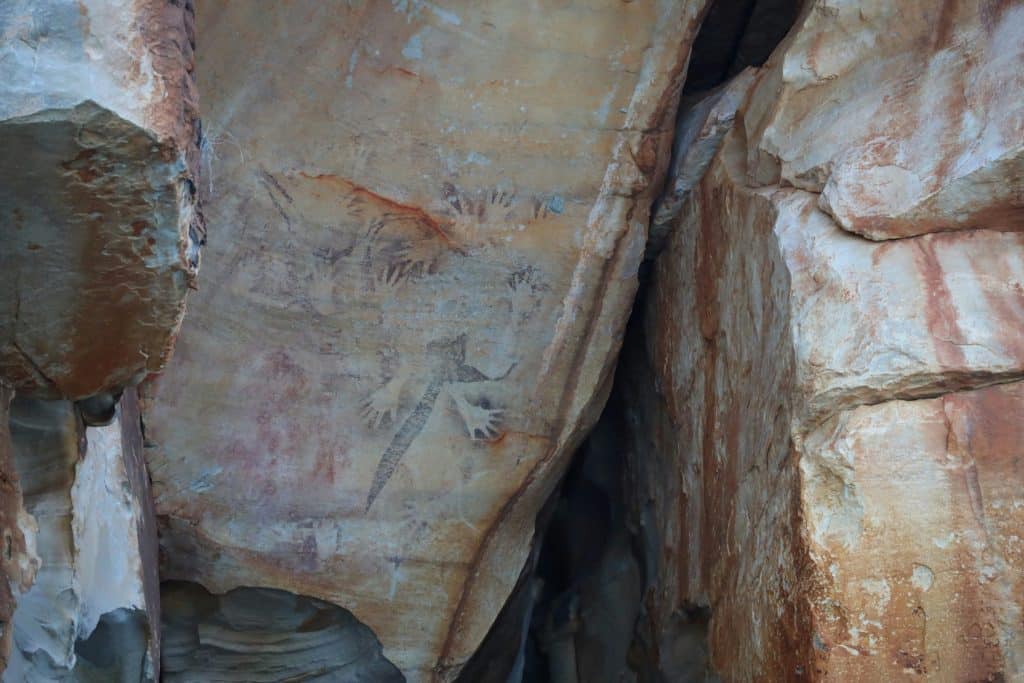
For Aboriginal culture specifically, connection to Country is inseparable from the Dreaming, the framework of creation stories and law that explains how the land, its features, and its living things came to be. Landforms such as rivers, rock pools, and dunes are not simply geography; they are records of ancestral action and ongoing cultural meaning. Seasonal change is read through movement and change in the Land, Water, and Sky Country, guiding practices that vary from region to region and nation to nation.
Because knowledge of Country belongs to specific communities and custodians, it cannot be generalised or borrowed freely. Different nations hold different stories, protocols, and responsibilities. This is a central reason why any respectful representation of connection to Country must be led by the people who hold that knowledge, a principle that shaped every stage of DuraCube’s collaboration with Blaklash.
Why Connection to Country Matters in the Built Environment
Australia’s built environment is increasingly expected to reflect the cultures of the land it occupies. Frameworks such as the Australian Government’s Indigenous Procurement Policy and state social procurement targets ask specifiers to support Indigenous businesses and outcomes, while design bodies encourage the meaningful inclusion of First Nations perspectives rather than surface-level motifs.
Done well, embedding connection to Country in a project moves the architect from a specifier of products to a participant in storytelling. It gives a building cultural depth through providing agency for community, supports Indigenous businesses and contributes to meeting the government- mandated participation goals. When executed poorly, it risks tokenism and unauthorized use of cultural knowledge, causing harm to the community.The difference lies in who leads the work and how the cultural intellectual property is protected, hence the collaborative partnership between Duracube and Blaklash.
The DuraCube and Blaklash Collaboration
The DuraCube First Nations Range was born from a shared commitment to greater cultural depth and narrative integrity in the Australian built environment. It is not a standard consultancy arrangement or a decorative exercise. It is a rigorous co-creation process led by Blaklash, whose expertise in Aboriginal and Torres Strait Islander design methodologies anchors the entire range.
Blaklash is a 100% Aboriginal owned and operated design consultancy that specialises in bringing First Nations perspectives to the forefront of the built environment. By anchoring the collection in Blaklash’s guidance, DuraCube ensures the materials do not simply feature “patterns” but faithfully represent the relationship between water, Country, resilience, and renewal. Every design in the range carries dual brand acknowledgement, signalling that Blaklash’s cultural authority is a central pillar of the work, not an afterthought.
Blaklash’s role runs through the concept, the storytelling, and the final linework of each design. The collaboration reflects a simple principle: connection to Country can only be represented authentically when First Nations people hold the pen. Blaklash’s cultural knowledge and creative leadership gives the First Nations range its integrity,, and their designs remain their own, protected and acknowledged at every step.
DuraCube’s role in the collaboration is to bring Blaklash’s vision into durable, specifiable products while upholding strict cultural sensitivity throughout. Every pattern and its meaning is created and directed by Blaklash; DuraCube does not adapt, reinterpret or generate cultural designs independently. The designs are protected under copyright law and Indigenous Cultural and Intellectual Property (ICIP) rights, and through a best-practice legal agreement Blaklash has authorised only specific, approved applications of the artwork, with any use beyond that authorisation a breach of both cultural protocols and the Copyright Act 1968 (Cth). Blaklash is credited alongside DuraCube across the range, ensuring the designers and their community are recognised as the cultural authors of the work.
Each pattern is tied to a specific cultural theme, telling stories which respond to living histories, while 10% of every specification to the Clontarf Foundation, linking the commercial act of specifying to tangible community outcomes (covered below). These safeguards are why DuraCube frames the range as an invitation for the architecture and design community to engage with First Nations storytelling responsibly, rather than a conventional product launch.
The First Nations Range: Living Histories and Shifting Landscapes
The First Nations Range is DuraCube’s collection of patterns designed by Blaklash, to be applied to the built environment. The narrative Living Histories celebrates the continuous sharing and perseverance of traditional knowledge, stories and traditions that sustain Country, culture and community. Through this concept, it unfolds further into distinct patterns exploring more themes of Country.
The first collection to launch is Shifting Landscapes, an exploration into the seasonality of Country. It explored ecological rhythms and cultural practices which are then embedded into the design. Co-created with Blaklash, it focuses on three design intents drawn directly from connection to Country:



Pattern 1: Erosion
Erosion reveals the passage of time through the ever-changing contours of the land, marking the deep connection between earth and water. In design, rock pools can inspire forms and materials that reveal the quiet presence of nature’s history.
Pattern 2: Seasonal Winds
Seasonal Winds: Taking inspiration from how wind carves through land, bending trees, shaping dunes, and etching curves into the earth, capturing both the passage of time and the resilience of landscapes constantly being reshaped through seasons.
Pattern 3: Regrowth
Regrowth: A study of renewal, where the top layer represents visible new growth and ecological change, and the root system below symbolises the foundations, soil health, biodiversity, heritage, memory, and ancestral knowledge that sustain each cycle of regeneration
Each pattern is aligned to a curated colour palette selected to match the existing DuraCube stock range, so specifiers can integrate deep cultural narrative into a project without compromising technical requirements. The patterns are made-to-order architectural solutions rather than off-the-shelf products, ensuring every application is intentional and the cultural story is represented respectfully in each unique environment.
Purpose Beyond Design: The Clontarf Foundation Partnership
Connection to Country is also about the continuation of culture through people, which is why community impact is built into the range. The partnership between DuraCube, Blaklash, and the Clontarf Foundation brings together culture, design, and education.
The Clontarf Foundation exists to improve the education, discipline, life skills, self-esteem, and employment prospects of young Aboriginal and Torres Strait Islander men. Through school-based academies across Australia, it supports thousands of young men each day, combining sport, mentoring, long-term relationships, and experiential learning to build life skills and support positive transitions into employment and further study.
Because 10% of every specification of the First Nations Range flows to the Clontarf Foundation, choosing the range is a practical way for specifiers to support Indigenous design inclusion while contributing directly to the next generation. It bridges the built environment and government-mandated participation, ensuring economic benefit from major projects flows back into Indigenous communities and design methodologies.
Specifying Connection to Country with Integrity
For architects and designers, the First Nations Range offers a way to honour connection to Country and provide agency to community. The cultural work is led by Blaklash, the intellectual property is protected, the designers are credited, and the community benefit is measurable through Clontarf. The specifier’s role is to engage with that story thoughtfully and let it travel with the project.
Representing the connection to Country well is not about decoration. It is about relationship, respect, and keeping First Nations knowledge in First Nations hands. That is the standard DuraCube and Blaklash set with this collaboration, and it is the standard the industry can build on.
Next Steps:
- Explore the First Nations Range and the Shifting Landscapes collection.
- Request design resources, certification, and samples to plan a made-to-order specification.
- Learn more about the Clontarf Foundation and Blaklash’s work in First Nations design.