
A championship culture isn’t just built on the field; it is forged in the locker room. But if that locker room smells of stagnant moisture and bacterial growth, the culture suffers alongside the facility’s reputation.
For facility managers and gym operators, the “locker room smell” is more than a nuisance. It is a sign of material failure and a significant barrier to player satisfaction. Whether you are managing a local pavilion or a professional stadium, maintaining a hygienic, odour-free environment requires a strategic combination of user etiquette and superior material selection.
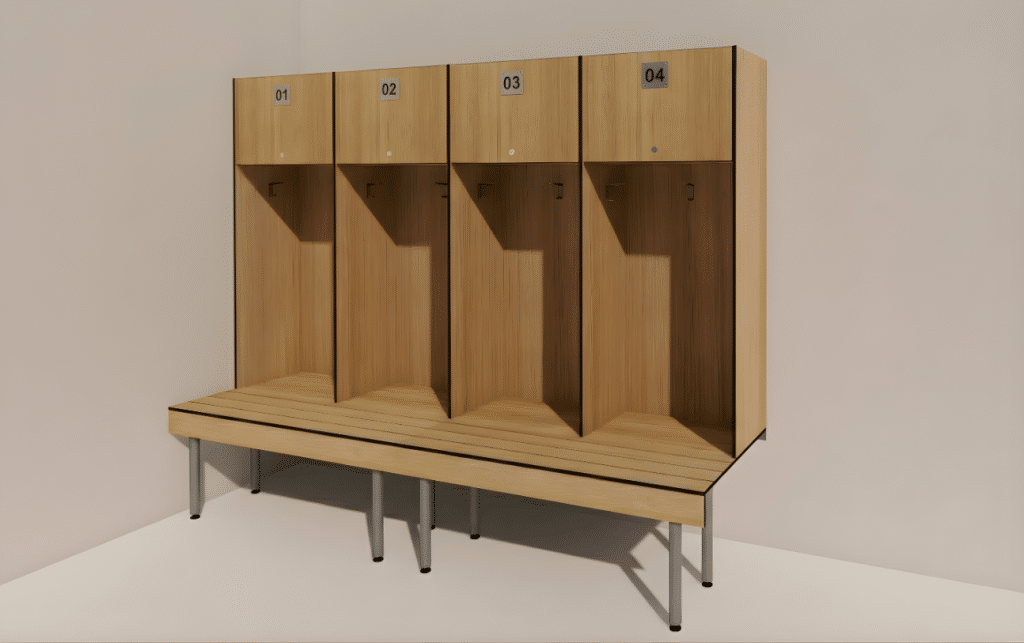
Table of Contents
ToggleThe Problem: Why Traditional Locker Rooms Fail
The primary cause of persistent odours in change rooms is the combination of high humidity, organic matter (sweat), and porous materials. Standard joinery often acts like a sponge, absorbing moisture and providing a breeding ground for bacteria.
When moisture is trapped in the core of a locker or behind a vanity, it leads to:
- Bacterial Proliferation: The source of that distinct “gym smell.”
- Structural Decay: Swelling, delamination, and corrosion.
- Increased Maintenance Costs: Constant deep-cleaning requirements that yield diminishing returns.
The Solution: Professional Methods for Odour Elimination
Eliminating odours requires moving beyond surface-level gym cleaning. To achieve long-term hygiene, facilities must adopt a multi-faceted approach:
1. High-ACH Ventilation & Air Quality
Aligning with AS 1668.2:2024 standards for mechanical ventilation is critical. Stagnant air is the enemy of hygiene. Ensure your extraction systems are specifically targeted at high-moisture zones, like shower cubicles and locker banks, to pull humidity out before it settles.
2. Establishing Gym Cleaning Etiquette
Since hygiene is a collaborative effort, successful facilities implement clear signage regarding:
Gear Storage: Discouraging the storage of wet towels and damp gear in unventilated lockers overnight.
Sanitisation Stations: Providing easy access to hospital-grade wipes for shared surfaces.
This will help standardise the way in which players utilise the locker room.
3. Non-Porous Material Selection
The most effective way to eliminate locker room smell is to specify materials that refuse to host bacteria. This is where the shift from traditional wood-based joinery to DuraSafe™ 13mm compact laminate becomes a game-changer. Its solid, non-porous core is inherently resistant to water, steam, and the growth of mould or mildew.
Introducing The Player Locker: Facilities Built for Championship Culture
To solve the “extreme use” challenges of elite sports environments, DuraCube has developed a storage solution designed to withstand the rigours of game day while maintaining a premium aesthetic.
The Player Locker moves beyond standard joinery to offer a moisture-managed system that prioritises athlete health and facility longevity.
Key Technical Advantages:
- High-Impact Build: Engineered specifically to withstand moisture, steam, and heavy gear without the risk of corrosion or delamination.
- Moisture Management: Built with high-impact ratings and materials that facilitate airflow, preventing the trapping of damp air.
- Club Identity: Fully customisable with team logos, nameplates, and club colours to inspire pride and excellence.
- Durability: Backed by a 15+ year warranty, ensuring your facility remains at peak performance for a decade or more.
Note: Due to the high level of customisation and technical engineering required for these systems, a lead time applies to all Player Locker orders. Contact our team for current project scheduling.
Next Steps
Maintaining a high-performance locker room requires more than just a cleaning schedule; it requires an infrastructure designed for hygiene.
Contact our team for project support to discuss how the new Player Locker can be integrated into your next sports facility fit-out, or explore our range of waterproof bench seating to complete your change room ecosystem.