
The binary approach to commercial bathroom design is changing, and quickly.Across education, corporate, and public sectors, gender-neutral facilities have moved from a niche consideration to a mainstream expectation. The question for designers and facility managers is no longer whether to plan for unisex access, but how to do it well.
Table of Contents
ToggleLimitations of Traditional Gendered Bathroom Layouts
Standard gendered bathroom layouts were built around assumptions that no longer hold for many users. Beyond the obvious exclusion of gender-diverse individuals, conventional cubicle designs create practical problems in shared environments:
- Inadequate privacy. Floor gaps, overhead sightlines, and lightweight partitions are acceptable in single-gender settings but become significant barriers to comfort and safety in unisex facilities.
- Inefficient footprints. Duplicating amenities across two separate blocks consumes floor area that a well-designed unisex layout could consolidate.
- Inflexibility. Gendered blocks are difficult and expensive to repurpose as building use and occupant needs evolve.
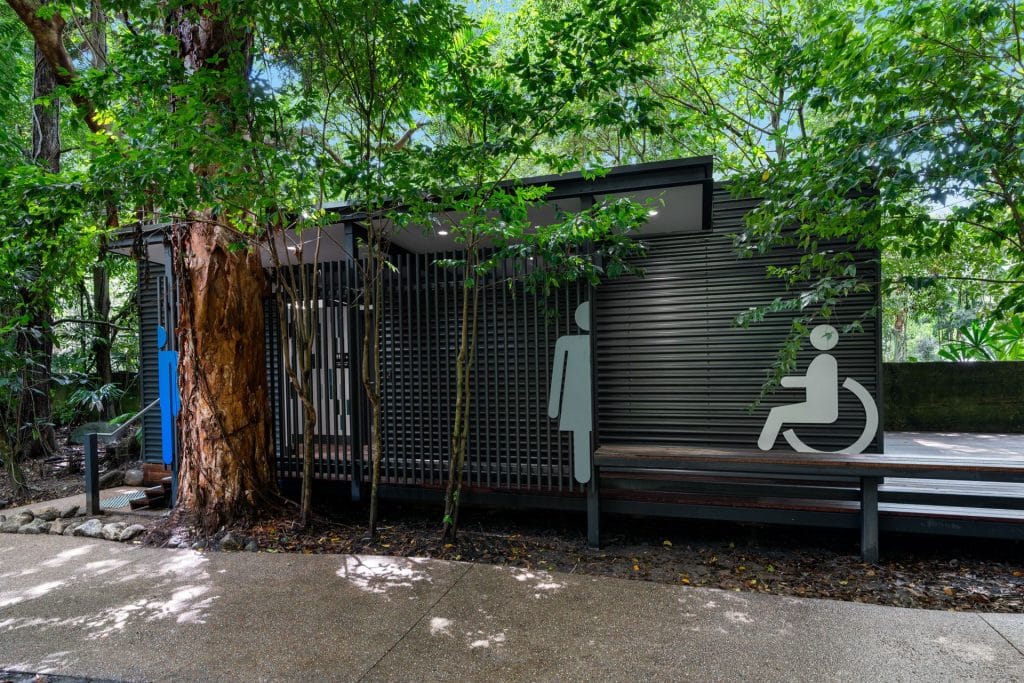
Designing for Inclusivity with Modern Unisex Facilities
Modern unisex facilities are built on the principles of “inclusive design.” By focusing on enhanced privacy and shared circulation areas, organisations can future-proof their facilities while creating a more welcoming environment for everyone.
1. Make Privacy Non-Negotiable
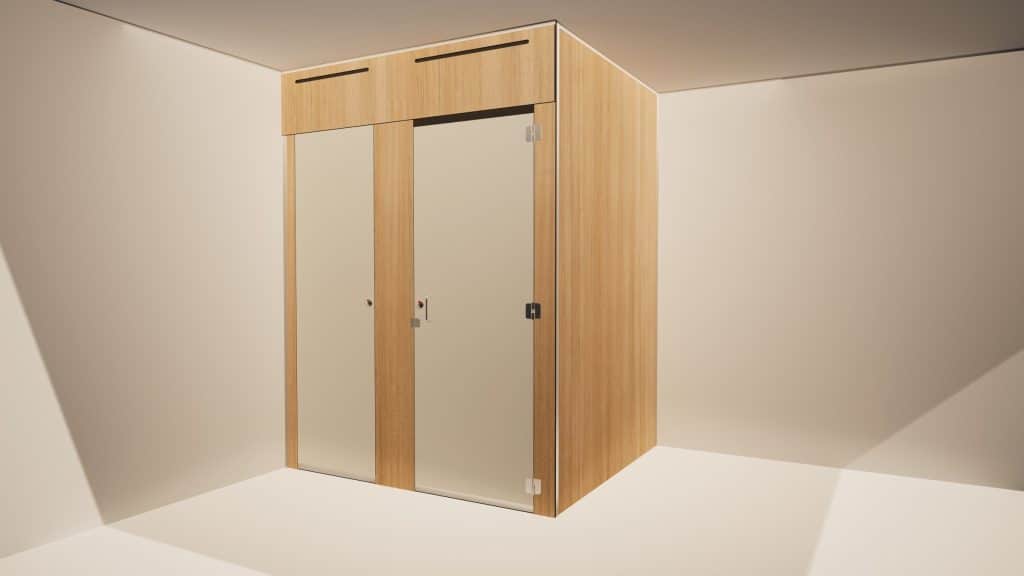
The single biggest factor in whether a unisex facility succeeds is how comprehensively privacy is addressed. Standard partitions, with floor gaps and partial-height panels, are simply not fit for purpose in a shared-gender environment. Effective privacy design means:
- Full floor-to-ceiling enclosure. Eliminating sightlines above and below the cubicle is essential, not optional.
- Solid, well-fitted doors. Lightweight doors with large perimeter gaps undermine even the best partition system.
- Acoustic consideration. Sound privacy is as important as visual privacy, particularly in corporate and educational settings.
DuraCube’s Full Height Privacy Max is engineered specifically for these environments, with full-height doors and side panels that meet the elevated privacy expectations of modern unisex facili
2. Efficiency and Safety
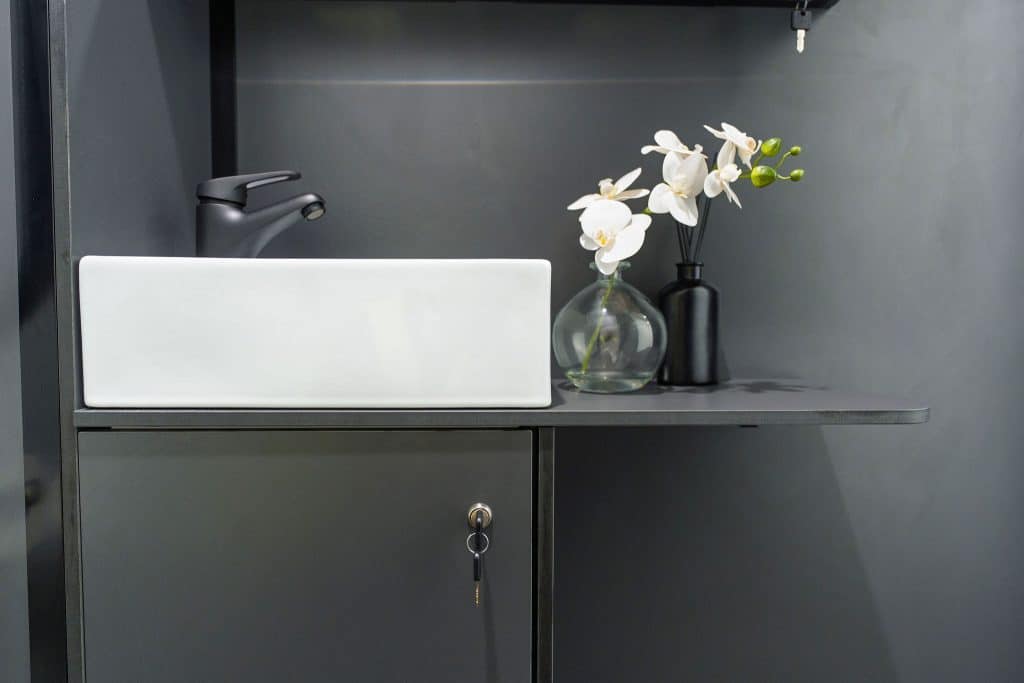
The layout of shared areas, particularly hand-washing and circulation zones, has a direct impact on both safety and user comfort. A Full Height Self-Contained cubicle system redefines what a unisex bathroom can be. With all amenities, including the vanity, housed within a fully enclosed pod, the entire experience is private, self-sufficient, and comfortable for every user.
- Complete self-containment eliminates shared-zone anxiety. Because hand-washing happens inside the cubicle, users never need to re-enter a communal space mid-visit. This is particularly valuable in unisex settings where shared vanity areas can be a source of discomfort.
- Safer by design. In educational settings, especially, it reduces opportunities for bullying by eliminating open spaces.
- A more efficient footprint. Self-contained pods can be arranged to optimise circulation without the need for separate, dedicated hand-washing runs, simplifying both the layout and the plumbing design.
- Wayfinding matters. Clear, inclusive signage and intuitive pod placement reduce hesitation and make the space welcoming for all users, particularly those using a unisex facility for the first time.
3. Future-Proofing for Shifting Norms
Social expectations and building codes are both continuing to evolve. A unisex bathroom designed today should be easy to adapt tomorrow. For example, in premium corporate environments, pod-style designs are gaining ground. These feature individual, fully enclosed bathroom pods that deliver a private, hotel-quality experience in place of a traditional communal block.
It’s also worth designing with compliance headroom in mind: as state and national guidelines around gender-inclusive facilities continue to develop, exceeding current minimums now reduces the likelihood of costly upgrades down the track.
Plan Your Unisex Facility With Confidence
Social expectations and building codes are both continuing to evolve. A unisex bathroom designed today should be easy to adapt tomorrow. For example, in premium corporate environments, pod-style designs are gaining ground. These feature individual, fully enclosed bathroom pods that deliver a private, hotel-quality experience in place of a traditional communal block.
It’s also worth designing with compliance headroom in mind: as state and national guidelines around gender-inclusive facilities continue to develop, exceeding current minimums now reduces the likelihood of costly upgrades down the track.