
Can a simple change in washroom architecture reduce school bullying and improve student wellbeing?
The data suggests that the traditional school bathroom, often a “blind spot” for supervision, is one of the most significant hurdles to achieving a safe learning environment.
For school principals and educational architects, the “bathroom problem” is a persistent pain point. Traditional designs featuring communal washing troughs and tucked-away entries are frequently cited as sites for anti-social behaviour, vaping, and bullying. As we move toward 2026, School Bathroom Design Guidelines are evolving to prioritise visibility, safety, and student dignity through trauma-informed principles.
The Problem: The Supervision “Blind Spot”
In many Australian schools, the communal wash area acts as a barrier to effective supervision. Because these areas are often separated from the main corridor by multiple turns or heavy doors, they become isolated zones where teachers cannot easily monitor student interactions without infringing on privacy.
This architectural “dead zone” leads to:
- Increased Bullying: Students avoid amenities for fear of unsupervised encounters.
- Hygiene Anxiety: Communal troughs often lack the privacy required for modern hygiene needs.
- Vandalism & Anti-Social Behaviour: Hidden areas encourage the misuse of facilities, leading to high maintenance costs for the school.
The Solution: Trauma-Informed School Architecture
Solving the “bullying hotspot” challenge requires a fundamental shift in how we lay out student amenities. The goal is to maximise supervision in communal areas while providing absolute privacy for personal hygiene.
Modern guidelines suggest removing the “outer door” of the bathroom block and moving the hand-washing stations into the open corridor. This “wash-bank” approach ensures that hand hygiene is visible to staff at all times, drastically reducing the opportunity for anti-social behaviour in communal spaces.
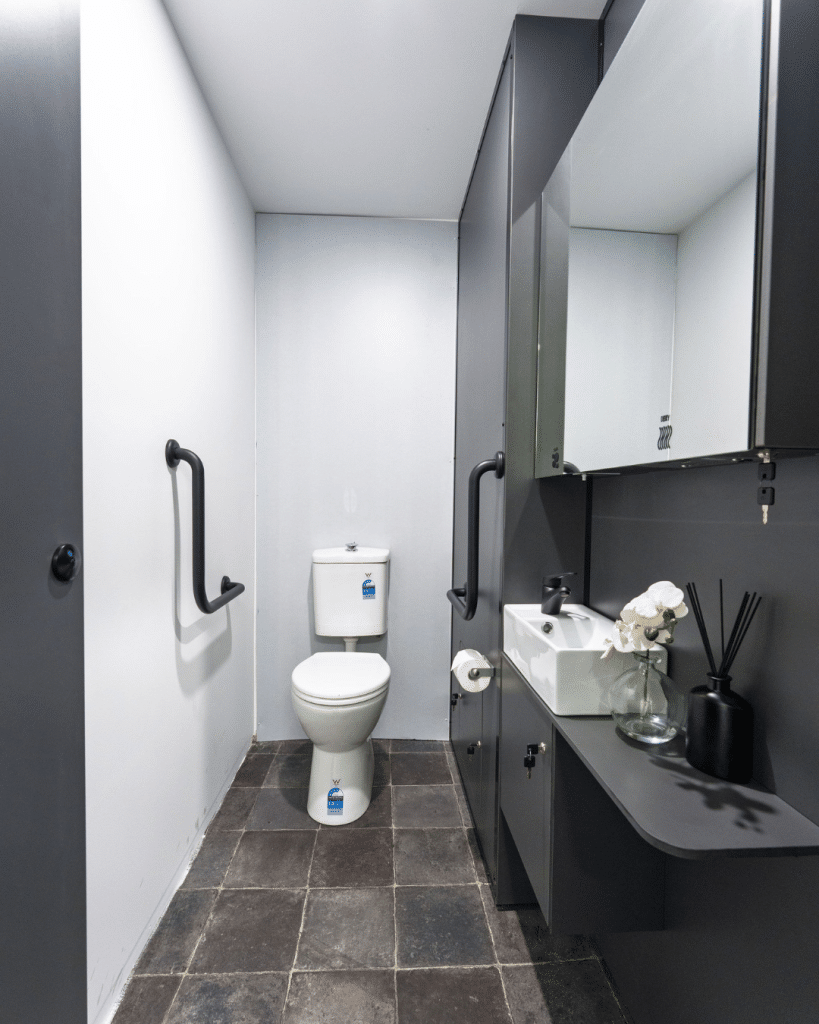
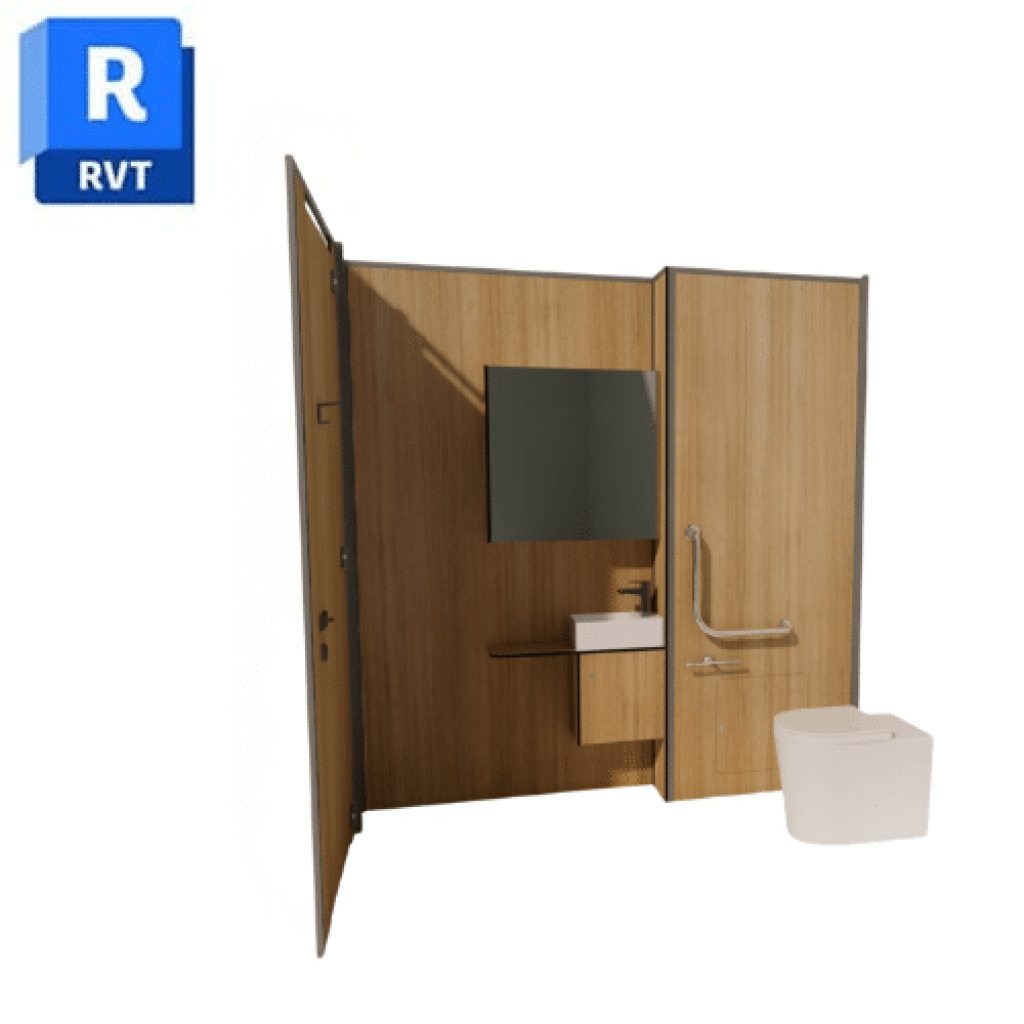
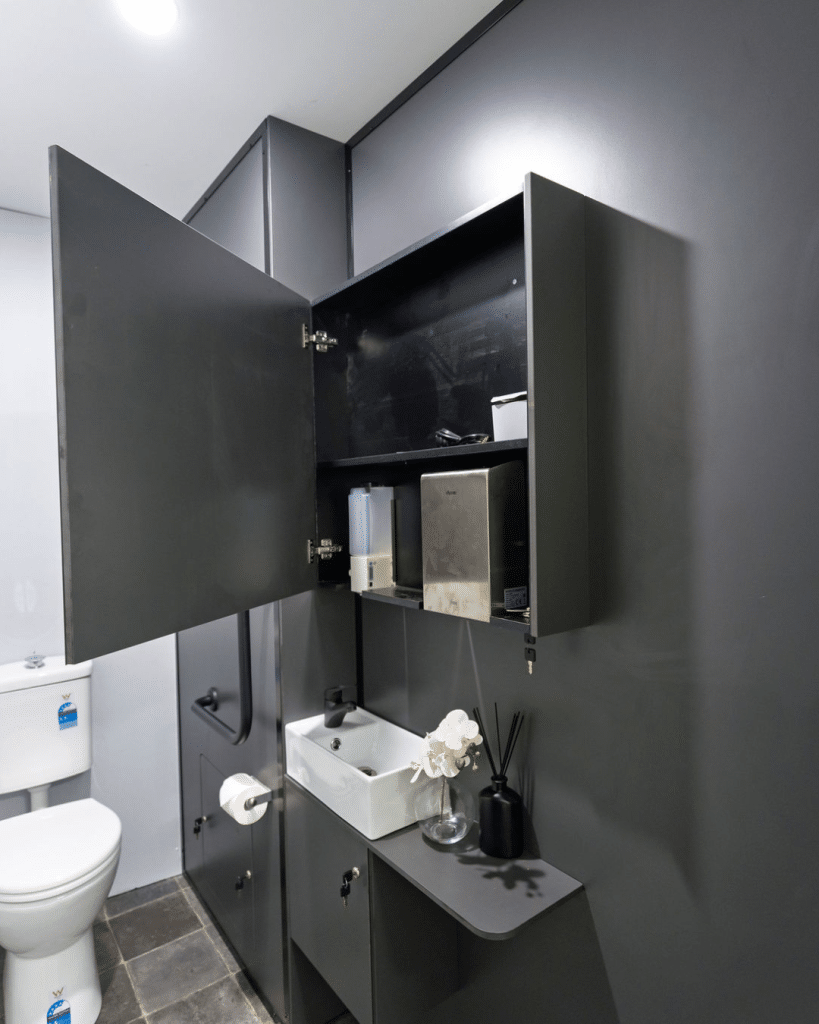
However, while hand-washing can be communal, primary hygiene tasks should not be. To support Gender-Inclusive Toilets and Trauma-Informed School Architecture, DuraCube has developed the Full Height Self Contained (FHSC)
By moving the washbasin inside a full-height, private cubicle, we provide students with a “sanctuary” where they can manage their hygiene in complete privacy. This is particularly critical for
- Maintaining the “Chain of Hygiene: From a clinical and facility management perspective, integrated hygiene prevents the spread of bacteria.
- Inclusive Access: Ensuring Gender-Inclusive Toilets feel safe for all students, regardless of identity.
- Space Efficiency and Flow: By integrating the wash activity into the cubicle, the communal “hotspot” (the trough or vanity area) is decluttered. This improves the overall traffic flow of the facility and allows architects to reclaim floor space that would otherwise be dedicated to large, exposed communal vanity units.
Our DuraSafe™ 13mm compact laminate is waterproof, impact-resistant, and antibacterial. In a school environment, this means surfaces that are easy to clean, difficult to vandalise, and built to last the life of the building.
Next Steps
Rethinking your school’s amenities is an investment in your students’ sense of safety and belonging? Contact our team for project support to see how the Integrated Cubicle with Basin can transform your school’s safety profile, or explore our guide on gender-neutral bathrooms.